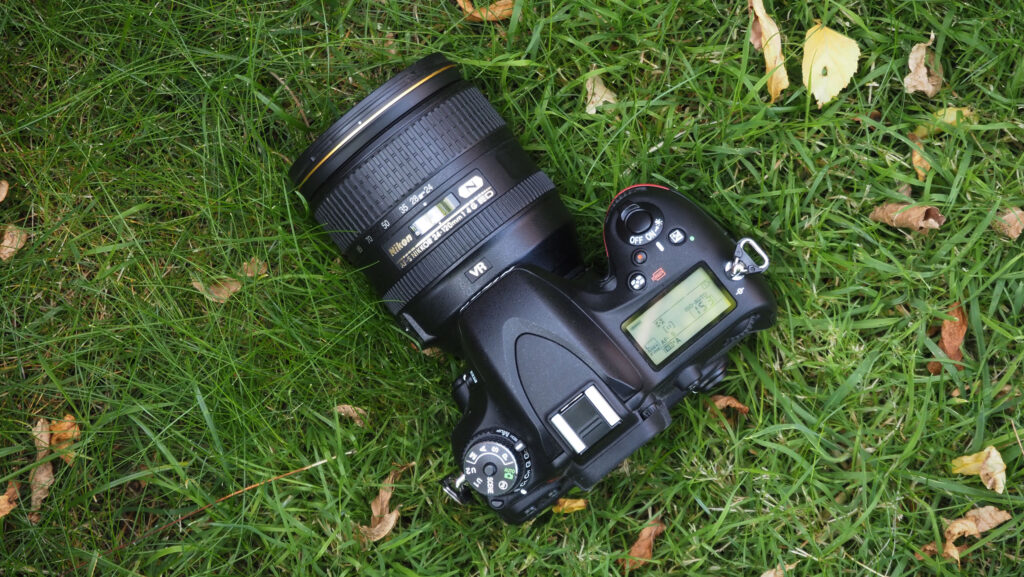
It’s easy to forget that a whole new generation of photographers has probably never used a DSLR. If you grew up in the mirrorless era, or you got into photography when mirrorless cameras were the norm, a DSLR will feel like a very strange beast… at first. Why even bring this up? Because a very strange thing is happening. As new camera sales dwindle, the used camera market is booming, and DSLRs are among the most popular retro purchase, because for now at least they are cheap, practical and powerful, and compatible with a lot of equally cheap lenses.
But if you haven’t used a DSLR before, it’s important to know what to expect. In particular, it’s important to bust a few myths around what many consider a design dinosaur. DSLRs don’t always do what mirrorless cameras do. They do their own thing. And this what so many photographers are rediscovering.
- DSLRs are bigger and heavier. There’s no denying it. If you want a super-compact camera you need to be looking at mirrorless, especially smaller formats like APS-C or Micro Four Thirds. But look, sometimes bigger is better. DSLRs give you better grips, more space for dials and buttons, and better handling for anyone with larger hands. Or even normal-sized hands if you like a camera you can get a proper hold of.
- The lenses are not. A lot of mirrorless fans make a fuss about how small mirrorless camera bodies are, but the lenses are much the same size as they ever were for DSLRs, sometimes larger, as makers go for ever more advanced designs. When you compare cameras+lenses, not just camera bodies, DSLRs are much closer in overall size. Indeed, with larger lenses, the better grip and heft of a DSLR body often gives a better balance and handling experience.
- Live view is not the same, for sure. When you switch to live view on a DSLR to compose images on the rear screen, the camera has to flip up the mirror and open the shutter to expose the sensor. You can tell it’s a bit of an effort! Also, the autofocus setup changes, so that you’re using much slower contrast AF to focus, though Canon did switch to on-sensor phase-detect autofocus for its later DSLR models.
- Viewfinder autofocus is different. When you’re using the viewfinder, DSLRs use a dedicated AF sensor separate to the main sensor and mounted behind the mirror. You don’t get as many autofocus points and they don’t cover the whole of the image area. You also don’t get fancy AI subject tracking or other modern innovations. But DSLR viewfinder AF is often extremely fast, and on more sports-orientated cameras there will be AF modes which are very good at subject tracking. It’s based on following shapes and colors not identifying subjects, but it’s worked well enough for a generation of pro sports photographers.

- DSLRs aren’t quiet. You have both a shutter and a mirror mechanism, so you do feel more of a mechanical jolt when you take a picture. Some DSLRs are quite quieter than others. There are no silent modes, except on very recent models well adapted to shooting in live view mode and which have electronic shutters.
- DSLR viewfinders are a revelation. They show you an optical image of the view through the lens which has a clarity you just don’t get with a mirrorless camera’s EVF. Some people would rather have a digital display that shows the effect of the camera settings, but EVFs often have a slight lag which you might not notice in everyday photography but becomes a problem with fast-moving subjects in burst mode.
- DSLR battery life is out of this world. With mirrorless cameras, battery level is a constant background anxiety. Typically, a mirrorless camera will offer 300-400 shots on a single charge, so you probably won’t want to go on a full day’s shooting without charging it first, and even then you might want to take a spare. Reasonably late-model DSLRs will give you a battery life of 800, 900 or 1,000+ images. With a DSLR your battery routine changes. If you check the camera in the morning and it’s still half full, you might not bother to top it up or you might give it an hour to bring it up to max again. Should you take a spare? With this kind of battery life it becomes a precaution, not a necessity.
- Image quality is excellent. Few recent technological advances in mirrorless cameras have made any difference to basic underlying image quality. You can buy a 24MP DSLR from ten years ago and get image files just as good as a 24MP mirrorless camera bought today. Still image quality in digital cameras pretty much peaked ten years ago. Only Sony’s 61MP and 66MP sensors have moved it on, though sports photographers might appreciate today’s stacked and semi-stacked sensor designs for high-speed shooting.
- You actually can shoot video with a DSLR, it’s just harder. Everything has to be done in live view, where you’re not going to get the same modern autofocus speed subject-tracking as mirrorless cameras. You also won’t get the choice of formats, resolutions, codecs and frame rates provided by modern mirrorless hybrids. You have to film differently. However, if you’re working with a static setup where you can use fixed or manual focus, you can get great results. People have shot whole movies on DSLRs. Many later DSLR models will shoot high-quality 4K video. Just don’t try any run and gun vlogging.
- You don’t get the luxury of IBIS. Well, you do get Shake Reduction with Pentax DSLRs, but for Canon and Nikon DSLRs the only stabilization you will get is from stabilised lenses Is this as good? Often. Generally, though, you may be disappointed by shaky shots when you first use a DSLR, so you may need to get used to faster shutter speeds. Having said that, many lower-end mirrorless cameras don’t have IBIS either, so it’s not necessarily a straight win for mirrorless cameras.

Is that everything? I think so. When you pick up a DSLR for the first time, it might come as a bit of a shock. The bad things will strike you first – the size, the noise, the weak live view and dated video features. It might take a while to notice the good stuff – the handling, the balance, the controls, the viewfinder.
It’s wrong to say that mirrorless cameras are better than DSLRs, or that DSLRs are better than mirrorless. They offer two very different handling and shooting experiences, and you have to decide which you prefer. One thing is for sure, though. If DSLRs do disappear from the camera market for ever, we will all have lost something.
Leave a Reply