
The Lumix S9 didn’t start out that well. It’s a great, low-cost full frame vlogging/video camera that’s also great for stills photography, but it had a lacklustre response at launch. What’s the problem? Its design and specs are fine but unadventurous and, worse, its small size also works against it and it feels awkward and unbalanced with larger lenses. This means the new Lumix S20mm f/2.5 is a very welcome addition.
News
The latest happenings in the world of digital imaging, whether it's camera news, new lenses, new tripods camera bags or other accessories or any other significant events in the world of photography and video.
Is the Canon EOS R8 II REALLY that much better than the original?

The Canon EOS R8 II has arrived, with some unexpected similarities to the old model, some welcome ergonomic changes and a new, er, design. It looks like this might be Canon’s long-rumoured ‘retro’ camera…
Sony’s new 400mm and 600mm supertelephotos can save you $20,000 and 4kg in weight!

You might have been underwhelmed by Sony’s announcement of its new FE 400mm f/4.5 GM OSS and FE 600mm f/6.3 GM OSS. Neither is cheap and both look quite slow compared to Sony’s existing FE 400mm f/2.8 GM OSS primes FE 600mm f/4 GM OSS. But it’s time to let the numbers tell the story because the savings in cost and weight are HUGE.
The OM PEN is officially launched and, if you ask me, OM could not have judged it better

OM System teased its new camera well before its official launch, and while it gave very little away, it was clearly a rangefinder-style camera with an integrated EVF. Combined with OM’s own interview responses over the past few months, this suggested a new PEN-series camera with the compact, pocket friendly format that made the original PEN series so popular,
New Fujifilm XF400mmF4.5 R LM OIS WR supertelephoto could be huge for sports and wildlife

The XF400mmF4.5 R LM OIS WR is a very interesting addition to the Fujifilm telephoto lens range and complements the high-speed Fujifilm XH2S and its stacked sensor and Fujifilm’s growing strength in the sports and wildlife market.
OM System teases new PEN-style camera, but you’ll have to wait until September 9 for the unveiling

This is the news that will make any Micro Four Thirds fan leap from their chair. It’s a short video, but it shows something completely unlike recent D-SLR shaped cameras from OM System. It looks – gasp – like a PEN!
Sony has just won two EISA awards. one for the A7 V and one for the A7R VI, but is this really significant?

EISA stands for Expert Imaging and Sound Association, and it hands out camera awards every year. It’s not the only organisation to do this as there is also TIPA (Technical Image Press Association), which announces its own awards earlier in the year. Both organisations license out their award logos for camera makers to use in their marketing. If that sounds a little cosy, well, kind of.
What the GoPro Mission 1 Pro ILS tells us about sensor size
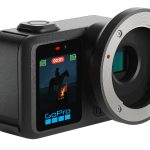
The GoPro Missiion 1 Pro ILS is due this September and it’s a pretty odd sort of camera, a kind of fusion between GoPro’s action camera sensor technology and interchangeable lens cinema cameras. It will use a Micro Four Thirds lens mount but GoPro’s existing 1-inch type sensor. What’s interesting, though, is what this small sensor can achieve – 8K 60p and 4K 240p video, or 8K 30p and 4K120p in open gate mode. These are insane specs in a $699/£599 camera.
Sony FE 100-400mm F5.6-8 OSS launched – an AFFORDABLE telephoto at last!
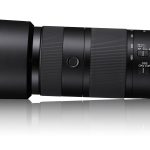
Sony already makes TWO 100-400mm lenses, but these are the more expensive Sony FE 100-400mm f/4.5-5.6 GM OSS variable aperture zoom at around $2,698/£2,149 and the even more expensive Sony FE 100-400mm f/4.5 GM OSS at around $4,298/£4,399, but the new FE 100-400mm F5.6-8 OSS is dramatically cheaper at $848/£848 and the first genuinely affordable option for beginners and enthusiasts.
The Sony A7R VI is another Sony that’s amazing at everything. Are you confused yet?

The Sony A7R VI is a substantial upgrade over the Sony A7R V in performance and video capabilities, though not necessarily in resolution. It’s another Sony powerhouse that has everything and does everything at blistering speed. Is it the best Sony yet? That’s where it gets complicated.