
That’s a bold suggestion, but just take a look at what’s around at the same price point. Only one other camera comes close for features, design and versatility, and that’s based on the L10’s predecessor.
News
The latest happenings in the world of digital imaging, whether it's camera news, new lenses, new tripods camera bags or other accessories or any other significant events in the world of photography and video.
Panasonic launches the ZS300 (TZ300 in the UK) – this is more like it!

The Lumix ZS300/TZ300 is a pocket-sized super-zoom compact camera that looks like a refreshed version of Panasonic’s previous ZS/TZ100 and later ZS/TZ200 cameras, and the perfect portable travel camera. The difference between this camera and most others like it is its larger 1-inch type sensor, which immediately offers a jump in quality over the tiny 1/2.3-inch sensors found in cheaper point-and-shoot compacts.
What does a pro ‘trinity’ lens set actually cost in 2026? Five different formats compared!

The launch of the new Nikon Z 70-200mm f2.8 VR S II made me think. At $3,197/£2,999 at the time of launch, this is a seriously expensive lens that is surely out of reach for anyone other than a full-time pro who can treat this lens as a logical business decision.
Tamron 35-100mm f2.8 Di III VXD is launched with a very interesting focal range

The new Tamron 35-100mm f2.8 Di III VXD does not cover one of the classic focal ranges, and this makes it all the more interesting. It’s not the first time Tamron has bucked the trend, and this new lens offers a fascinating alternative to 24-70mm standard zooms, 24-105mm zooms and even 70-200mm portrait/event lenses, with a constant f/2.8 aperture, modest cost and relatively light weight.
The new Canon RF 14mm f/1.4 L VCM fills a gap that maybe shouldn’t even have been there

Canon has done a good job in filling out its RF lens range since the introduction of its new mirrorless lens mount. That’s probably just as well, given its stranglehold on third-party licensing. The new RF 14mm f/1.4 L VCM is certainly a great addition, especially for astrophotography, landscapes, architecture and interiors – but why has it taken Canon so long to produce an ultra-wide prime lens of a type you would take for granted in other systems?
The new Canon RF 7-14mm f/2.8-3.5 L Fisheye STM has a 190-degree angle of view!

Canon has at last added a fisheye lens to its RF mount line-up, and it’s a zoom lens not a prime. The RF 7-14mm f/2.8-3.5 L Fisheye STM offers both a fully circular fisheye image that fits entirely within the sensor area and a full width diagonal fisheye effect that fills the frame. It’s kind of like getting two fisheye effects in one, depending on the focal length you use.
Sony launches the A7 V, so what’s new and do you need it?
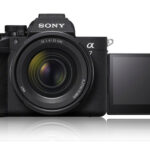
Headline features for the Sony A7 V included a new ‘partially stacked’ sensor design for faster readout speed, improved video features and faster burst shooting. There’s also a new BIONZ XR2 processor which incorporates Sony’s latest AI technology, faster autofocus and AF tracking, improved color science with a claimed 16-stop dynamic range and improved AI-powered white balance control.
Don’t write off the Fujifilm X-T30 III as just a warmed up version of an old camera

It seems like the Fujifilm X-T30 has been around for YEARS, but actually it was first launched as recently as 2019. But then it was updated to the X-T30 II with some very minor alterations in 2021 in a move that suggested a camera being kept going for just that little bit longer. Then… nothing. It looked like the X-T30 II was just slowly winding down into obsolescence. But no. Now we have the X-T30 III, and this is a very interesting little camera for several reasons.
The Leica M EV1 is a Leica M with an EVF – SACRILEGE!

For those who don’t know, Leica M rangefinders are breed apart, a throwback to a camera design abandoned years ago by every other maker and about as far as you can get from a modern mirrorless camera. And yet, at a stroke, the Leica M EV1 has closed that gap and brought the Leica M design right up to date. So that’s got to be good, right? Well, not if you are Leica diehard.
What’s the single most important innovation in the new Nikon ZR?

The Nikon ZR is interesting for all sorts of reasons. For a start, it’s the first time Nikon and RED tech has been combined in a camera after Nikon acquired the RED cinema camera brand in 2024. That’s significant in many ways, not least because the ZR now incorporates RED’s own colour science and raw codecs. But that’s not it.