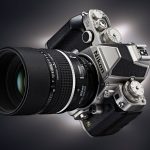
I reviewed the Nikon Df when it first came out in 2013, never imagining that it would be another 13 years before I finally owned one. Some people think the Df is a kind of Frankenstein camera, some people think it’s a work of art. It has more quirks, flaws and odd decisions than practically any other camera, but I don’t actually care. I mean, just look at it.
Why a 1-inch sensor isn’t actually a 1-inch sensor
We imagine that a 1-inch sensor measures a full inch across the diagonal, right? Not quite. Not even close, as it happens. That’s because this sensor size is a relic of a bygone era, when digital capture devices used CRT tubes and it was the size of the tube that was quoted, not the actual imaging sensor.
Laowa 4.5–10mm f/2.8 CF Fisheye Zoom review
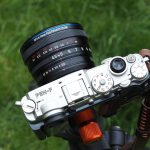
Verdict: 4 stars It’s cheap, it’s compact, it offers a choice of fisheye styles and it performs really well. The Laowa 4.5–10mm f/2.8 CF Fisheye Zoom is a really attractive lens for anyone who wants to dabble in fisheye effects or even use them professionally – though the manual focus operation does slow things down and an inaccurate distance scale is a real black mark against a lens that otherwise feels really well made.
Is it time for camera makers to start quoting readout speeds?

Sensor readout speeds have become something of a talking point, especially as we move towards ever higher video capture resolutions and frame rates, super-fast continuous shooting modes and the gradual replacement of traditional mechanical shutters with electronic shutters.
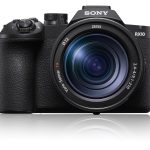
The Sony A7R VI is another Sony that’s amazing at everything. Are you confused yet?

The Sony A7R VI is a substantial upgrade over the Sony A7R V in performance and video capabilities, though not necessarily in resolution. It’s another Sony powerhouse that has everything and does everything at blistering speed. Is it the best Sony yet? That’s where it gets complicated.
The new Panasonic Lumix L10 might suddenly be the best compact camera on the market
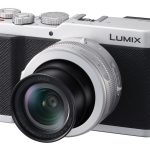
That’s a bold suggestion, but just take a look at what’s around at the same price point. Only one other camera comes close for features, design and versatility, and that’s based on the L10’s predecessor.
What are the best compact digital cameras to get in 2026 IF ANY?

We’re in the middle of a compact camera boom. It started with the TikTok celebrity Fujifilm X100 VI, continues with the barely refreshed Canon PowerShot G7 X III and has scooped up a whole raft of second-rate compacts from yesteryear and bargain-bin point-and-shoot Amazon specials that anyone can afford and no-one should buy. What’s going on?
Nikon AF‑S DX 18‑105mm f/3.5‑5.6G ED VR review
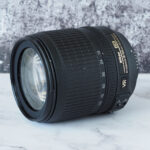
Verdict: 4.5 stars Let’s get this straight from the start. The Nikon AF‑S DX 18‑105mm f/3.5‑5.6G ED VR is a low-cost kit lens with average but acceptable optical performance and plastic build – it even has a plastic lens mount. So why do I rate it so highly? This is where performance and specfications meet real-world handling. This a very ordinary lens, technically, but it’s light, really nice to use and has a great focal range. I can’t help but like it.
Nikon D7500 review in 2026
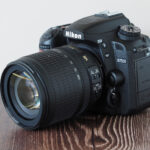
Verdict: 4.3 stars The Nikon D7500 was in many ways a somewhat odd successor to the much-loved D7200. Launched in 2017, it brought a drop in resolution and a single card slot, but also came with 4K video and a tilting touchscreen. It is perhaps a better all-rounder, but how does it stack up in 2026 as a used buy or, if you can still find it, a new camera?
Panasonic launches the ZS300 (TZ300 in the UK) – this is more like it!
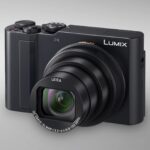
The Lumix ZS300/TZ300 is a pocket-sized super-zoom compact camera that looks like a refreshed version of Panasonic’s previous ZS/TZ100 and later ZS/TZ200 cameras, and the perfect portable travel camera. The difference between this camera and most others like it is its larger 1-inch type sensor, which immediately offers a jump in quality over the tiny 1/2.3-inch sensors found in cheaper point-and-shoot compacts.